
History & Heritage
90 Years of Iran Carpet: A Conversation with Seyyed Mahmoud Hosseini
Jan 30, 20266 min readIran Carpet Company
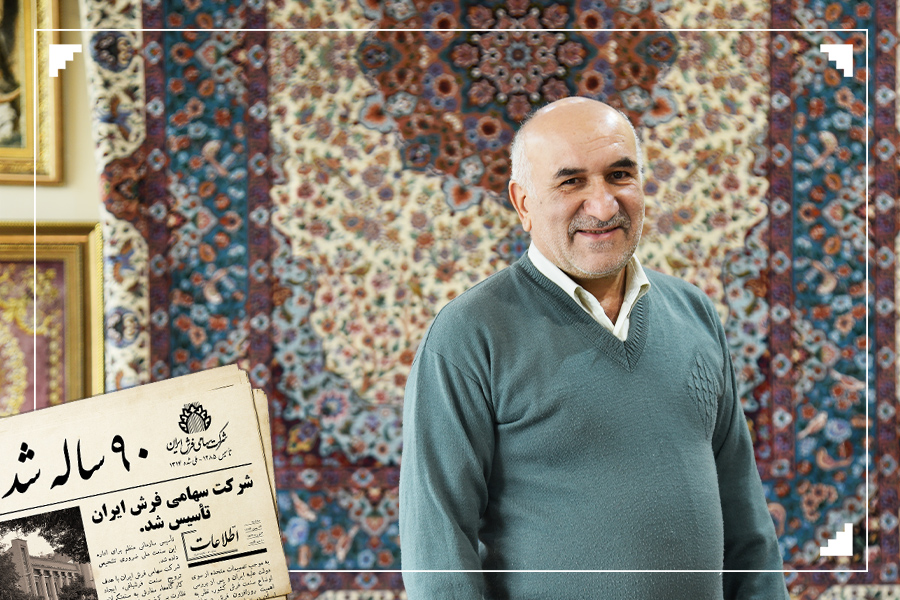
To mark the 90th anniversary of the nationalization of Iran Carpet Company, we have conducted a series of conversations with the Company’s veteran colleagues—people who have spent many years of their professional lives helping preserve, produce, and advance Iranian handwoven carpets. In this installment, we speak with Mr. Seyyed Mahmoud Hosseini, a colleague in Iran Carpet Company’s commercial department, about his professional experience and memories, and his perspective on the path the Company has taken over the decades.
My name is Seyyed Mahmoud Hosseini, and I served Iran Carpet Company for more than 30 years. I joined the Company around 1370 SH (1991–92) after seeing a recruitment advertisement. Although I had also interviewed with several other organizations, my interest in carpets led me to choose this one. A carpet college was established in 1369 SH (1990–91), and I began studying there as a student. I earned an associate degree in carpet studies. Of the approximately 60 students, just over 30 eventually remained with the Company, and I was one of them. Later, in 1396 SH (2017–18), I earned my bachelor’s degree in carpet studies from the Valenjak University of Applied Science and Technology. After more than 30 years, some retired colleagues were invited to return to work with the Company, and I was honored to continue my service there as well.
In those years, Iran Carpet Company enjoyed great stature and a very distinctive position, and handwoven carpets were regarded quite differently. Handwoven carpets were recognized as a valuable art and industry, and the Company played a central, decisive role in guiding the field. Although changes in management and differences in taste over the years brought their share of ups and downs, despite all these challenges, the Company has consistently retained a standing above that of many other producers.
In my view, Iranian handwoven carpets are unrivaled in the world. In past years, especially during the 1370s SH (the 1990s), we took part in a number of international trade fairs, including events in Germany, Italy, Portugal, and elsewhere. At these fairs and in international markets, Iranian carpets have always stood head and shoulders above carpets from Pakistan, Turkey, Afghanistan, Nepal, China, and even some European countries. Carpets were woven in countries such as France and Portugal in the past, but none could match Iranian handwoven carpets in quality, authenticity, or artistic value. Iran Carpet Company has been the principal steward of Iranian carpets since 1314 SH (1935). Despite the ups and downs, and the differing preferences of managers over the years, it continues to hold a leading position in handwoven carpet production.
Handwoven carpets have no meaning without love and passion. Whether weavers, sellers, or buyers, we all share a deep attachment to carpets. Weavers work knot by knot with love, and in many regions they weave colors to the accompaniment of poetry and song—for example, in Kerman, Kashan, Birjand, and elsewhere. This art is sustained by more than wages and income; it is passion and love that have kept it alive to this day.
Working in handwoven carpets is demanding and takes time; it is not suited to those seeking quick profits. Unlike commodities such as gold, carpets do not rise rapidly in price, and the added value they yield is often modest relative to the effort invested in making them. Today, market preferences have shifted toward simpler, more modern designs. While preserving authenticity, designs and colors need to be updated in line with customers’ current needs and tastes, and production should respond to market demand. We should also remember that weavers are the industry’s greatest asset, and that we must always support these skilled artisans.
One of my interesting memories concerns a customer named Mr. Zarrangi. In 1384–1385 SH (2005–2007), he purchased around 100 high-quality carpets from Iran Carpet Company, intending to ship them to the United States. However, because of the sanctions imposed, the shipment was not allowed to enter the country, and all the carpets had to be returned to Iran. Although he had paid in full, he trusted the Company and asked us to sell the carpets in Iran through Iran Carpet Company. Examples from that collection are sometimes offered at Monday’s Weekly Handwoven Carpet Auction and are known as the Zarrangi carpets. Another wonderful and lasting memory is of working with Mr. Matsuo from Japan in 1383 SH (2004–05). He came to Iran Carpet Company to make a purchase. Our honest pricing and sound dealings helped build a friendly relationship, leading him to make repeated purchases from the Company in subsequent years—a relationship that continues to this day. Some time later, he invited my wife and me to Japan and covered all our travel arrangements, expenses, and accommodation, at a cost of about $3,800. Mr. Matsuo is truly a very kind and principled person, and we are still in touch. He had planned to visit Iran again this summer, but circumstances in Iran made the trip impossible. This is one of my fondest memories because a simple purchase grew into a genuine friendship.
 History & Heritage
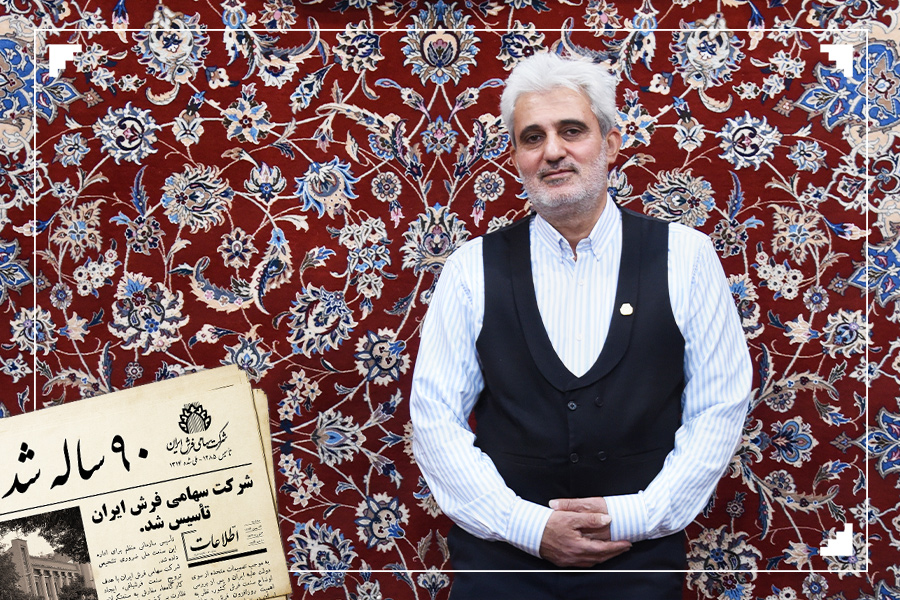
This interview was conducted to mark the 90th anniversary of the nationalization of Iran Carpet Company and to record and preserve the experiences and memories of its long-serving and veteran colleagues.
 History & Heritage
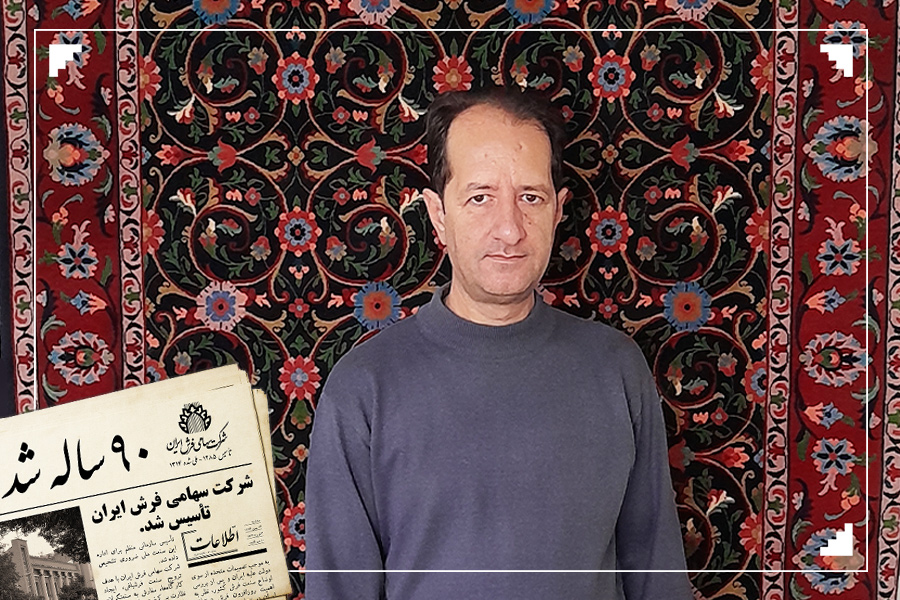
This interview was conducted to mark the 90th anniversary of the nationalization of Iran Carpet Company, and to record and preserve the experiences and memories of its veteran and long-serving colleagues.
 History & Heritage
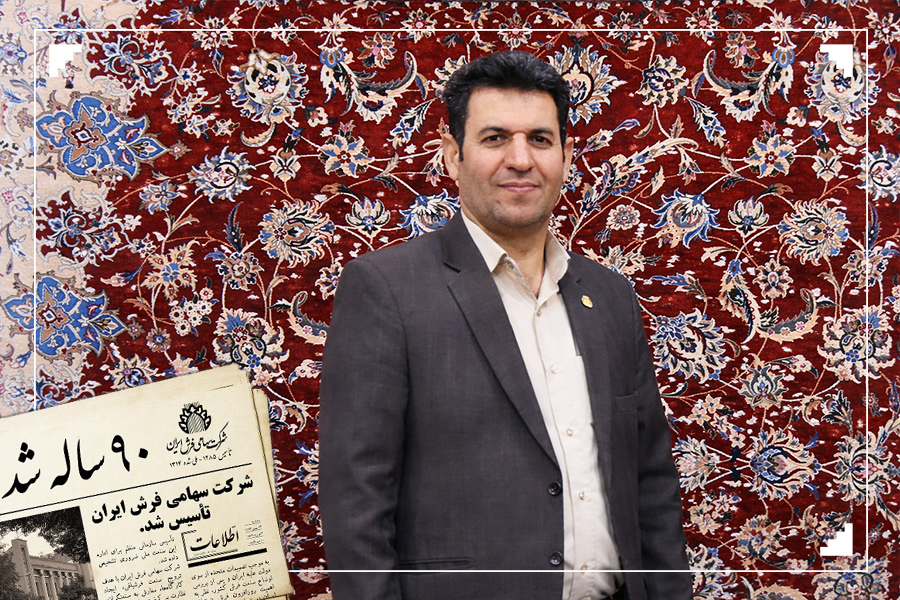
This interview was conducted to mark the 90th anniversary of the nationalization of Iran Carpet Company and to record and preserve the experiences and memories of its long-serving and pioneering colleagues.