
Corporate News
Reweaving the Carpet of Shah Abbas II’s Tomb
Jan 25, 20235 min readIran Carpet Company
Specifications of the Rewoven Carpet
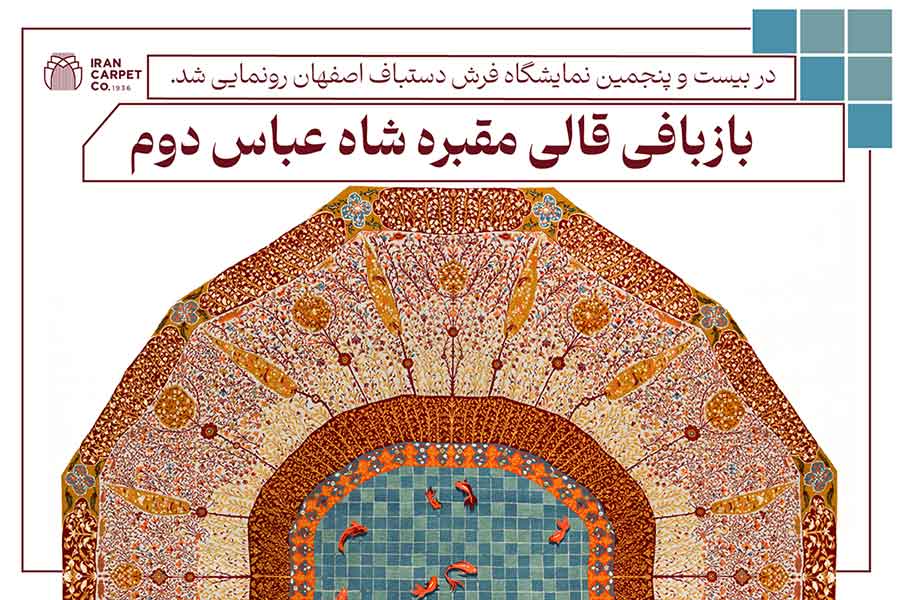
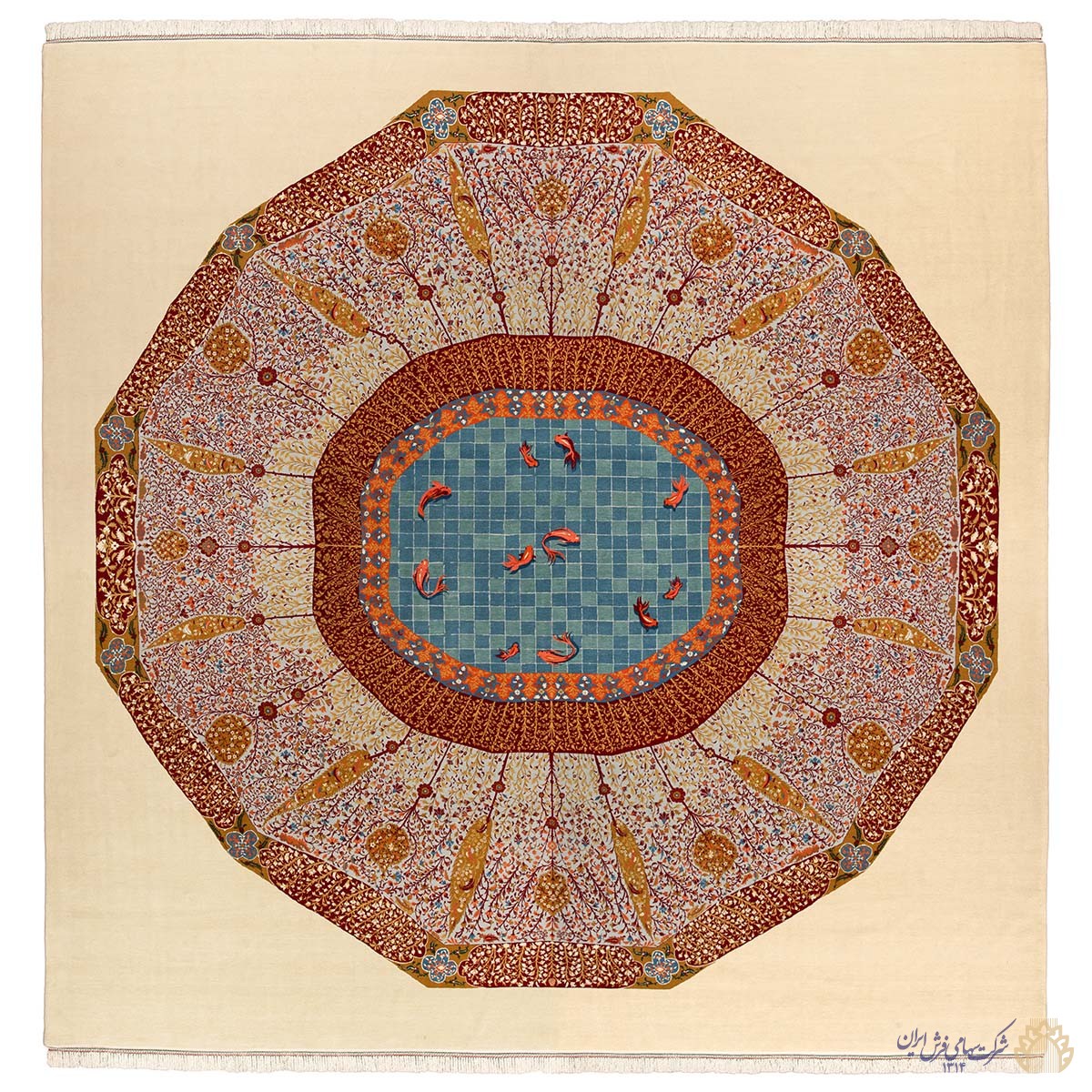
The twelve-sided carpet from the tomb of Shah Abbas II, described as one of the seven wonders of the carpet-weaving world, consists of fourteen silk-woven pieces; not only its pile, but also its warp and weft are silk. The carpet is now housed at the Fatima Masumeh Shrine Museum in Qom. Because of its large dimensions, it is not possible to display all of its pieces together. Of the fourteen pieces, two are large central carpets, each in a twelve-sided form and measuring 810 cm in diameter. Iran Carpet Company has rewoven these two central carpets as a single piece. In the original work, the central section was left entirely without weaving or design so that the stone tomb of Shah Abbas II could be seen. In the reweaving project, however, this central section has been transformed into a pool or central water basin.
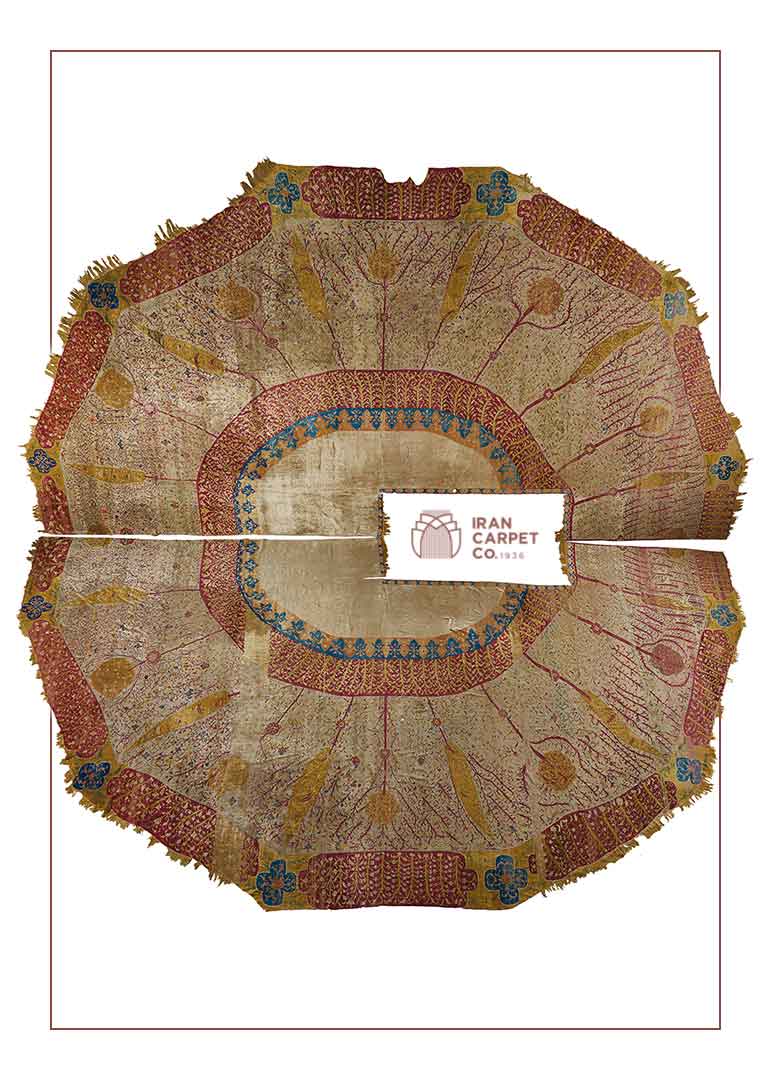
There can be little doubt that, more than 350 years ago, the designers and weavers of this magnificent carpet intended to place the tomb of Shah Abbas II within a Persian garden. This was a distinctive, twelve-sided garden, with an innovative design unlike other garden carpets of the Safavid period. It was adorned with cypress and pomegranate trees, repeated in alternation, and its dimensions and form were entirely in keeping with the twelve-sided courtyard and architecture of the tomb, with a doorway built into each side. The courtyard can still be seen today inside the shrine, a short distance from the tomb of Fatima Masumeh.
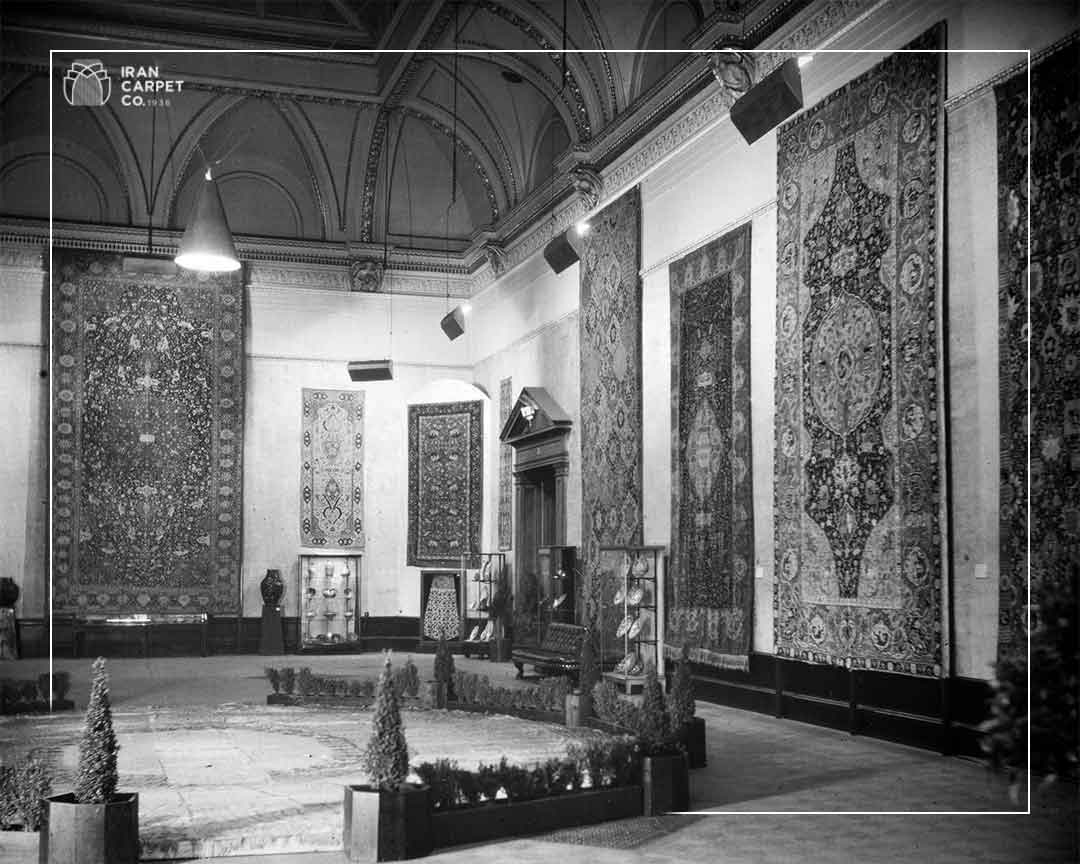 The 1931 London exhibition, showing the carpet from Shah Abbas II’s tomb laid on the floor
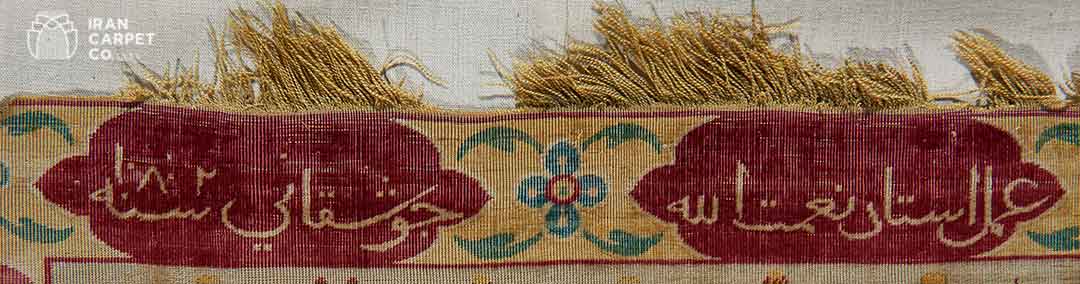
A small carpet was laid along each side of the main carpet. All were woven entirely in silk and designed to correspond with the twelve side doorways. Of these twelve small carpets, ten are now held at the Fatima Masumeh Shrine Museum in Qom. It is worth noting that the artists who created this singular work used just nine colors—a remarkable, inventive and forward-looking feature, especially in a carpet inspired by the vivid colors of a Persian garden. Each 6.5 cm contains nearly 70 asymmetrical Persian (Senneh) knots. In 1311 SH (1932), the fourteen carpets were sent by the government of the time to the Exhibition of Persian Art in London for their first international showing, under the direction of the late Iranologist Arthur Upham Pope. They were subsequently returned to Iran. One of the twelve small carpets bears an inscription reading:
Work of Master Nematollah Joshaqani, in the year 1082 AH
As part of a new artistic movement in the design and weaving of Iran’s carpet masterpieces, Iran Carpet Company has placed the reweaving of several knotted works from the Safavid golden age on its agenda. The reweaving of the carpet from Shah Abbas II’s tomb is the Company’s artists’ first effort to renew the authentic traditions of Persian carpet weaving.
Accordingly, after careful study of the original work, the Company redesigned and rewove the main design of the two central carpets from Shah Abbas II’s tomb without the slightest alteration. In keeping with the theme of revival, however, the central section has been transformed into a large pool, as seen here. This not only makes the unique carpet functional in the present day, but also fulfils, in a different form, the original makers’ vision of creating ancient Persian gardens more than 350 years later.
The design of the pool and water basin in this carpet was inspired by the incomparable works of the late artist Feizollah Khan Safdarzadeh Haghighi. Feizollah Khan Haghighi first brought a renewed appreciation of Iran’s seven-color tilework into Isfahan carpet design in 1349 SH (1970). Nearly four decades later, his artist son, Amirhossein Safdarzadeh Haghighi, gave this approach a new expression by combining it with the Persian pool, a distinctive feature of historic Iranian architecture. Today, this has become an artistic movement and a source of inspiration for many Iranian designers.
In keeping with the theme of revival, Iran Carpet Company’s artists not only changed the dimensions of the original carpet but also used fine hand-spun wool from Kurdistan to weave this important work. After more than five decades, this marks a renewed effort to restore hand-spun wool to the authentic Isfahan carpet. The weaving workshop in Isfahan continues to produce other carpets in hand-spun wool, with further works to be unveiled in the near future.
All washing and finishing processes for this carpet were carried out at Iran Carpet Company’s workshops in Karaj. The final washing stage, however, was postponed until the spring of 2022, both because the winter season can affect the carpet’s appearance and to make it possible to display the work at the Isfahan Carpet Exhibition.
It is hoped that bringing together the ideas of reweaving and revival in this work—each of which carries its own distinct and valuable principles in the field of art—will launch a new movement in the use of hand-spun wool in carpet weaving and further enhance the brilliance of Isfahan carpets.
 Corporate News
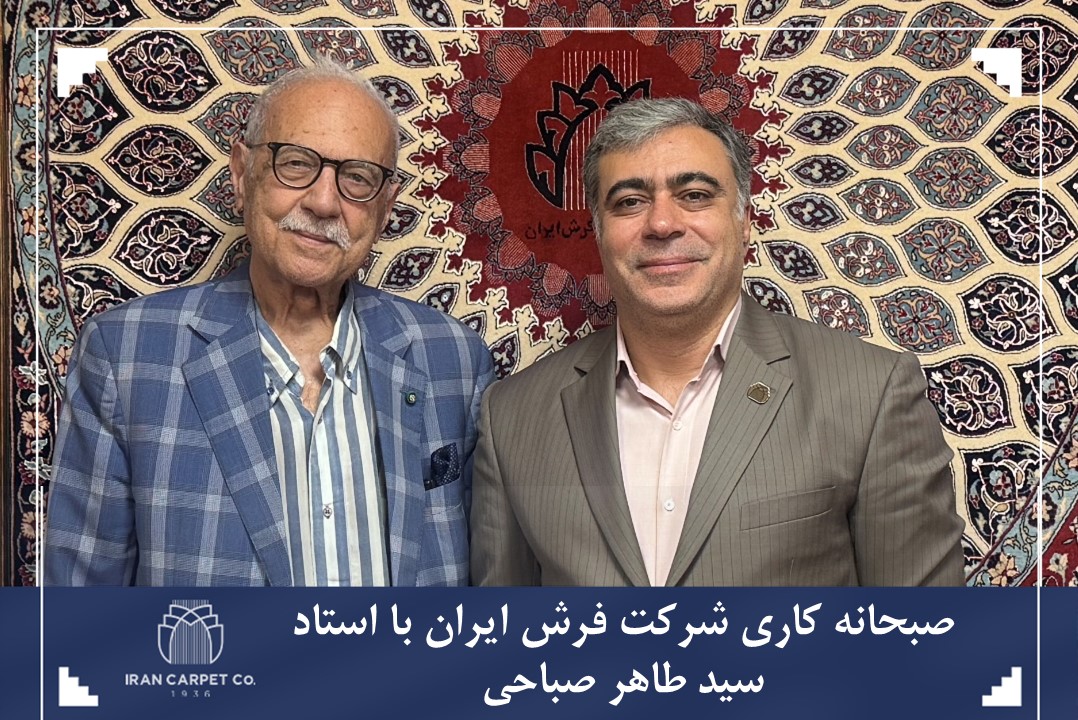
Master Seyyed Taher Sabahi, the renowned Iranian researcher, author, collector, and carpet scholar, was a guest of Iran Carpet Company this morning. During the cordial meeting, the participants explored opportunities for collaboration on reweaving distinguished historic works, publishing specialist books and journals on carpets, and holding joint training courses with academic and educational institutions in Iran and Italy.
 Corporate News6
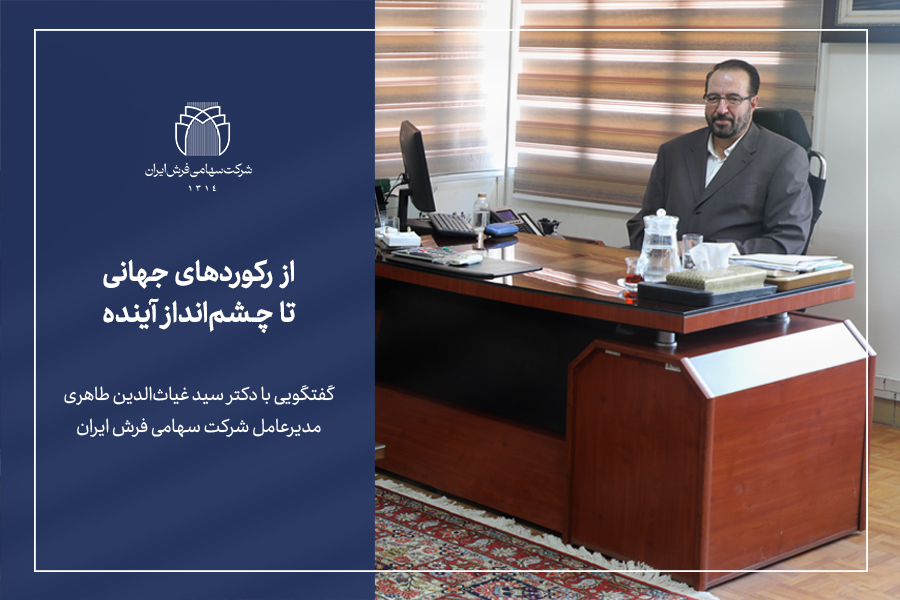
In this candid conversation, the CEO of Iran Carpet Company reflects on the brand’s history and global achievements, from producing some of the world’s largest handwoven carpets to bespoke projects for international hotels.
 Corporate News10
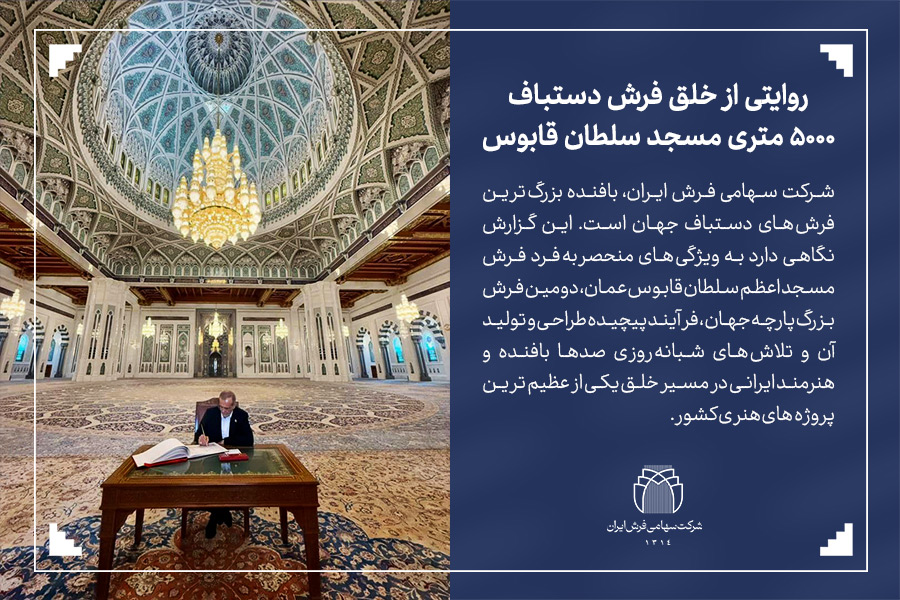
Iran Carpet Company is the maker of some of the world’s largest handwoven carpets. This report explores the exceptional features of the Sultan Qaboos Grand Mosque carpet in Oman, the world’s second-largest single-piece handwoven carpet.