1,408 Handwoven Pieces Donated by Master Tanavoli
In Iranian culture, art is a broad concept encompassing countless works whose sources lie in taste, discernment, and the creative impulse. Today, scholars of art describe as folk art works created within a community, woven into its everyday life and customs, and passed down from one generation to the next.
In the writing of art history, handmade objects have often been overlooked, and researchers have sometimes given them only passing mention. A shift in perspective toward such creations is thought to have taken place with the founding of the Bauhaus school (1919 CE). For the Bauhaus founders, the unity of art and the elevation of handmade work made the distinction between the decorative and functional aspects of art untenable.
By contrast, thinkers have offered various answers to the fundamental question, “What is art?” and proposed different ways of categorizing it, yet handmade objects have still not found a place commensurate with their worth. Moreover, in Iran, an obscure hierarchy of handmade objects has long existed, with some considered superior to others. Another defining feature of Iranian culture has been their practical nature—sometimes serving multiple purposes—alongside an appreciation for beauty and visual appeal. Both qualities have shaped how these objects are valued.
In light of the foregoing, handwoven works across the Iranian cultural sphere are arguably among the most significant creations classified as folk art. They may also be placed within the sphere of the applied arts. As is well known, handwoven works in our country are extraordinarily varied and serve many purposes. This is particularly evident among nomadic communities, for whom this approach is integral to their way of life: they make for themselves what they need.
Among the country’s handmade works, those that were visually compelling and distinctive, and had no machine-made equivalent, found admirers and endured over time. At times they were a family tradition; at others, an occupation—a tradition and a craft whose beauty was plain to see. In recent decades, policymakers increasingly came to regard handmade production as an occupation. The resulting drive for enterprise diminished the creative impulse, brought innovation to an end, obscured the roots of the tradition, and encouraged blind imitation.
Meanwhile, the efforts and inquiries of forward-looking practitioners seeking new ways to express and present traditional foundations brought together overlooked works from across Iran—objects that had long since disappeared from view. In this sense, they are guardians of Iranian culture.
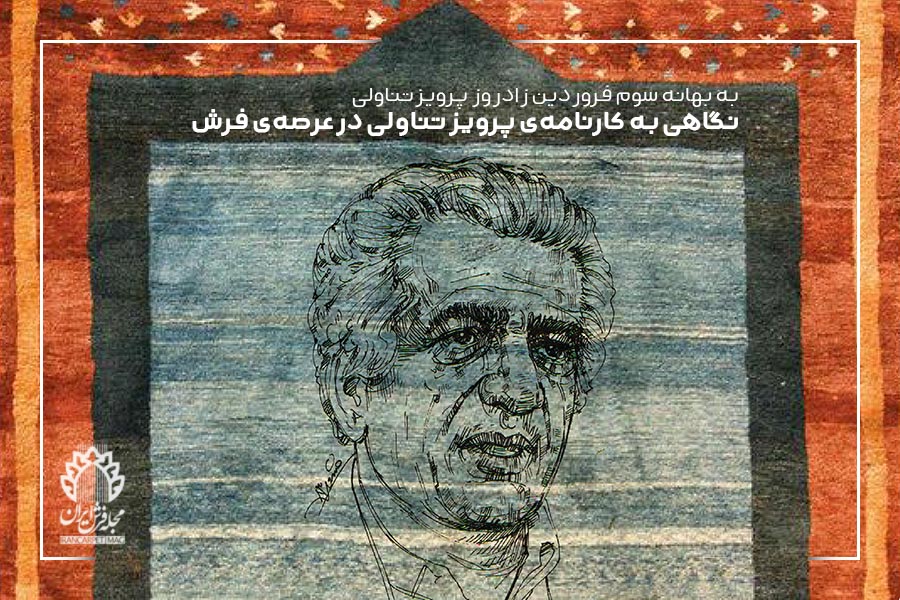
Over the course of 65 years, Master Parviz Tanavoli, one of our contemporary artists, has assembled a collection of tribal and village handwoven works, each bearing witness to a tradition.
He has donated 1,408 handwoven pieces to the Ministry of Cultural Heritage. He had intended the Carpet Museum of Iran to house them, but a lack of storage facilities led to plans for their permanent display in Shiraz, in a building restored and renovated for this purpose.
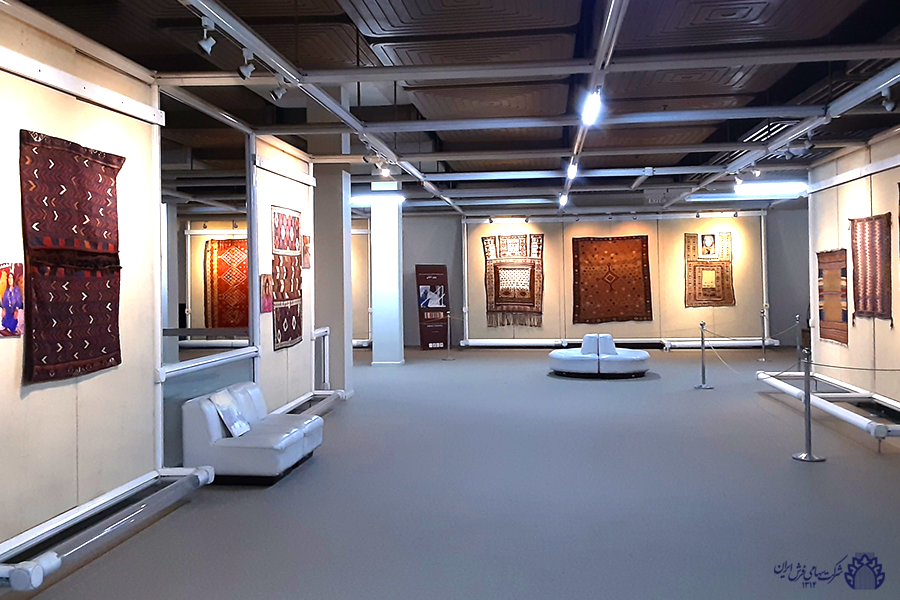
The first phase of the donation began in 1398 SH. Of these works, 198 pieces were placed in the Carpet Museum in 1399 SH. With the assistance of Master Toraj Juleh, 88 pieces from different regions of the country were selected and put on display on 2 Khordad of the current year. In addition to floor coverings—including gabbehs, carpets, and kilims—the donated works include textiles made for a range of purposes: flour cloths, bread cloths, salt bags, chair covers, chantehs, saddlebags, coverings for pack animals, covers for hookah and tobacco, spoon holders, khorjins, and mafrash storage bags.
Two things became clear through this donation. First, the Carpet Museum is the most significant and fitting place to preserve such an exceptional collection. In Master Parviz Tanavoli’s words, it is “the best place in the world.” Second, love for one’s homeland is a value that material considerations cannot outweigh: Parviz Tanavoli declined Kuwait’s offer to purchase these works.
That rival is not the one who enters through my door; love is no tale that can be driven from the heart.
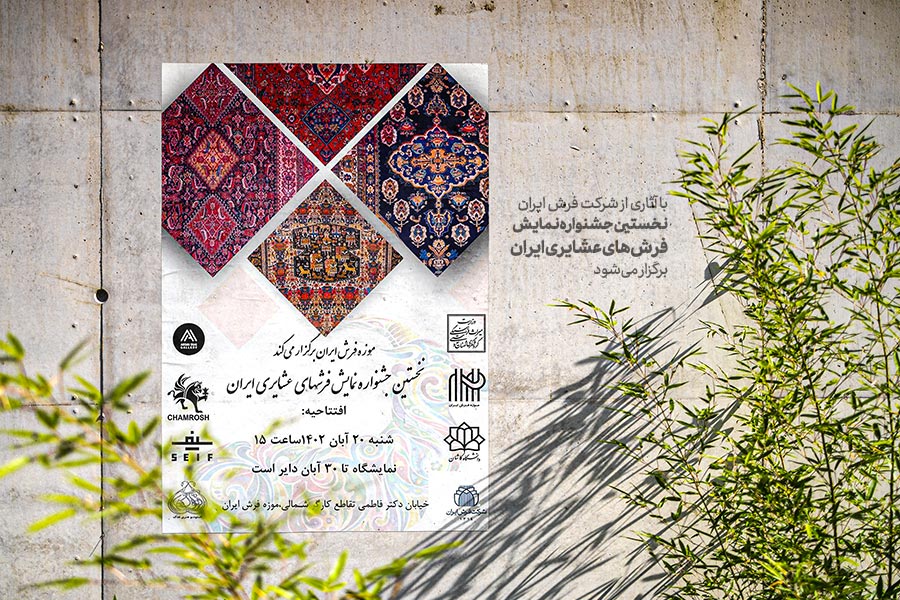
It is worth noting that Iran Carpet Company also donated a collection of museum-quality carpets, assembled over the course of its work, to the Carpet Museum of Iran in 1393 SH.
Photo Album (4)
Related Reading
All News & Reports Events & Highlights12
Iranian Nomadic and Rural Weavings
Yaser Amin Mahboob, a handwoven carpet designer and researcher, presents a selection of rare nomadic and rural weavings at the Carpet Museum, bringing to light a little-known part of the heritage of Iran’s ethnic communities.